
偷心俏冤家
Chinese firm’s Lixun-1 ‘space tug’ eyes maiden flight in Q1 2027 after key propulsion tests_我的网站

一 |
据长春市新型冠状病毒肺炎疫情防控工作领导小组办公室消息,根据《新型冠状病毒肺炎防控方案(第九版)》要求,经研究决定,自2022年9月13日12时起,调整部分区域风险等级,调整如下:一、高风险区调整为中风险区(2个)双阳区(2个):双阳区云山街道阳光安居小区3栋、双阳区云山街道阳光安居小区1、2栋二、中风险区调整为低风险区(5个)绿园区(2个):绿园区青年路街道风华新苑小区3号楼、绿园区普阳街道朝阳小区5区5栋宽城区(1个):宽城区柳影街道新月市场楼B2栋朝阳区(1个):朝阳区湖西街道领秀朝阳上院23栋经开区(1个):经开区东方广场街道聚宝家园9栋其他区域风险等级不变。(总台记者 张旭成 王梓)
。 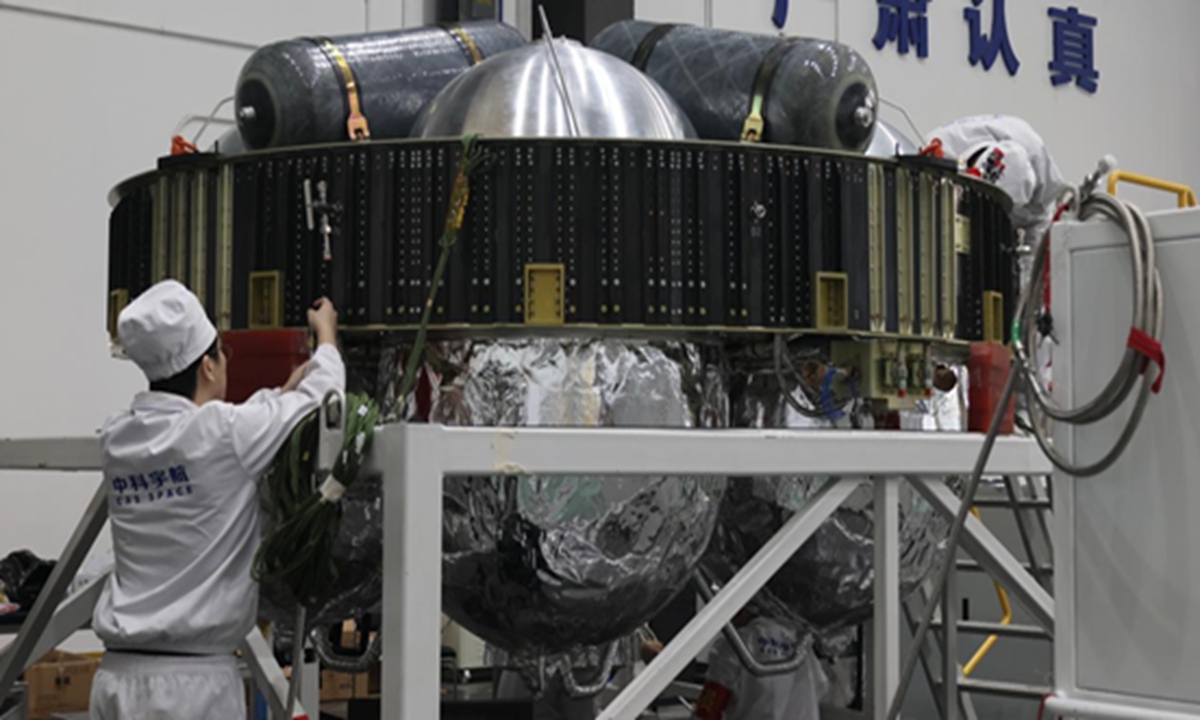
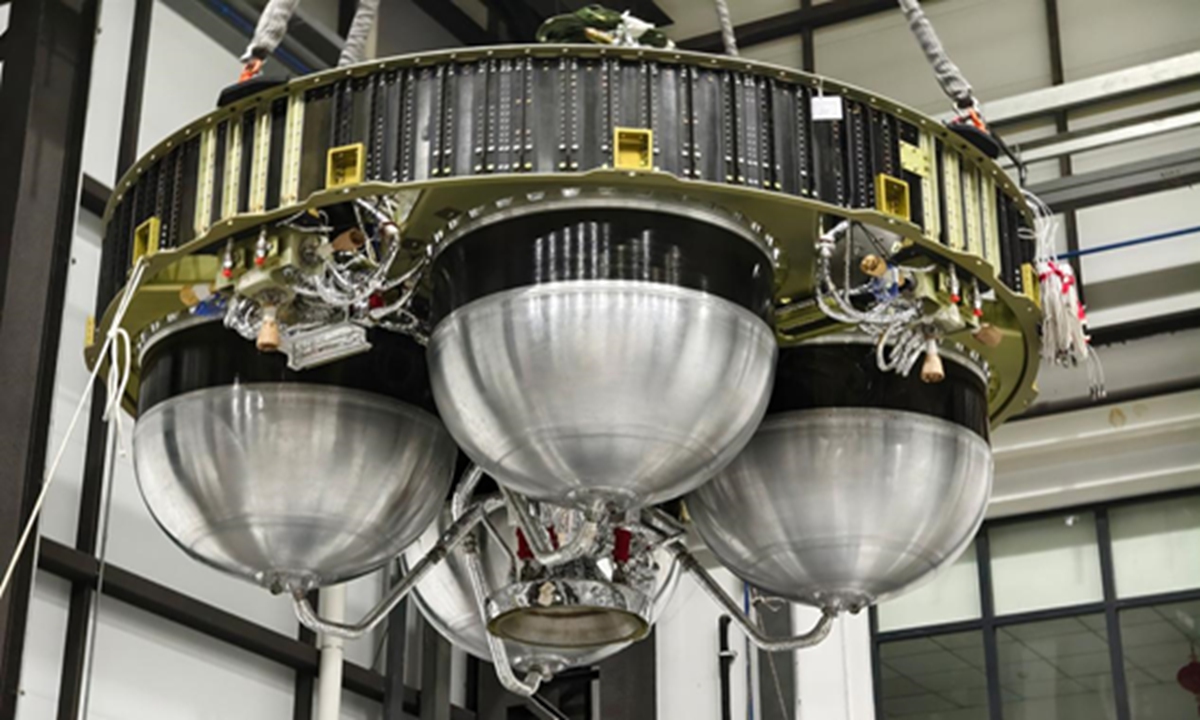
Lixun-1 upper stage, a versatile "space tug" developed by China's commercial space firm CAS Space, is scheduled to make its maiden flight in the first quarter of 2027 after completing a series of key propulsion-system tests, the developer and its chief designer told the Global Times on Tuesday.
The "tug" is designed to ferry satellites from one orbit to another and support missions ranging from constellation deployment to lunar exploration.
While the main stages of a rocket carry payloads from the ground into an initial orbit, an upper stage takes over once the craft is in space. By repeatedly restarting its engine and changing orbit, Lixun-1 can deliver satellites to higher or different orbits, distribute multiple spacecraft to separate destinations during a single launch, or send probes onto trajectories toward the moon and beyond, Global Times learned from the developer.
Yang Haoliang, chief designer of the Lixun-1 upper stage, compared the system to a shuttle service. "If the regular stages of a launch vehicle are like a long-distance bus," - they carry the upper stage and satellites from Earth to a near-Earth parking orbit - the upper stage then takes over as a "space tug," carrying its satellite "passengers" onward to their designated orbital "stops," Yang explained.
That capability can have a direct impact on how efficiently satellites are launched and operated, Yang said. If a satellite has to climb from an initial orbit to its final destination using its own engine, the process can consume a considerable amount of onboard propellant and reduce the fuel available during its operational life. An upper stage can instead perform that orbital transfer, helping conserve satellite fuel and potentially extend its service life.
It can also make one rocket launch do more work. Instead of releasing a batch of satellites into roughly the same orbit, Lixun-1 can repeatedly ignite its engine and maneuver between deployments, sending different satellites to different altitudes and inclinations. Yang said this would help accelerate constellation deployment while improving the efficiency of individual launches.
The practical ambitions behind the system are backed by a major technical milestone reached this month. In August, Lixun-1 completed its PV-001 integrated propulsion-system coordination firing test, during which the entire system operated smoothly for 566 seconds.
Yang told the Global Times that the current Lixun-1 upper stage has a thrust of 20 kilonewtons and can achieve a specific impulse of 315 seconds, which he described as reaching an internationally leading level. The August firing covered the planned profile for the maiden mission, an important step before the system proceeds to flight testing.
The test was more than a demonstration of the engine itself. As an important system-level verification during development, it examined the coordination and engineering reliability of the engine pressurization system, propellant delivery system, propellant management system and servo-control system under the fully integrated configuration.
Of a series of tests that accumulated 5,211 seconds of firing time, the latest one focused on three core technologies: a high-thrust, high-performance 20-kilonewton upper-stage engine capable of multiple starts; balanced propellant delivery from multiple parallel tanks; and a highly reliable integrated electrical system. Their successful verification means Lixun-1 has completed its system-level testing and is ready to move into the flight-test phase, according to the developer.
Lixun-1 has been designed as a modular and generally adaptable upper stage rather than a system tied to only one rocket. It is intended to work with CAS Space's Kinetica-2 and Kinetica-2 heavy-lift variants as well as other launch vehicles, Yang said.
When paired with the Kinetica-2 family, Lixun-1 could significantly expand the rocket's mission range. For communications missions, it could deliver satellites to geosynchronous transfer orbit or even directly to geosynchronous orbit, conserving satellite propellant while supporting the deployment of high-throughput satellites and future 6G communications spacecraft.
For multi-satellite missions, the combination could distribute spacecraft to different orbital altitudes and inclinations during a single launch, potentially serving both low-Earth-orbit constellations and medium- or high-orbit payloads. For deep-space missions, it could place probes onto Earth-moon transfer trajectories and support lunar exploration, Yang said.
The upper stage is designed to be able to conduct more than 20 engine ignitions, autonomously plan orbital-transfer routes and operate under the vacuum and extreme temperature conditions of space. After completing payload deployment, it can also carry out orbital disposal maneuvers to reduce space-debris risks.
Yang said the Lixun-1 and Kinetica-2 combination is designed to cover the vast majority of commercial satellite launch requirements while retaining the ability to participate in major national space projects. More broadly, the upper stage forms part of CAS Space's effort to build launch capabilities reaching medium and high Earth orbits and deep space, extending the reach of China's commercial space sector toward higher orbits and more distant destinations.
。
Current article:http://lkq8.foujiongwenruapoumeizhan.buzz/62g/tign1.html
Published on:04:45:40
最新文章
- 新三板基础层公司迈信智农大宗交易溢价12.36%,成交金额99万元
- Sara Arjun gives Dhurandhar co-star Ranveer Singh a moving tribute as she shares BTS photos
- 生活小能手 叠被我最行——厚街镇中心幼儿园大班级叠被子技能秀
- 500多名僧侣齐聚奥克兰参加全球佛教峰会,议题之一是“放生”
- 育碧《魔法门之英雄无敌 3 重制版》游戏《上古起源》官宣,已上架 Steam
- 《Modern Warfare 4》公开测试:你需要了解的一切
- 哈利伯顿自曝选秀夜曾致电太阳:想和布克打球
- 凌晨,新疆哈密突发地震
- “蛇年启运,福满家门”——星河幼儿园2025春季学期开工大吉
- How Chinese Military Applies Psy-Op Tactics to Counter US Visits to Taiwan
标签云
热门文章
- 意大利足协:受疫情影响2020至2021年意大利球场门票收入几乎为零
- 从煤矿到AI漫剧 山西吕梁数智化布局“破圈”提速,从煤矿到AI漫剧 山西吕梁数智化布局“破圈”提速
- 直接罢训!迪马济奥:佛罗伦萨前锋小基恩迟到+罢训,要求去科莫
- Exclusive: Naoero president, Chinese ambassador cycle island together passing China-supported projects, Chinese-run retail stores
- 奥博穆:大众正遭遇百年来最严重行业动荡 处境岌岌可危!
- AI芯片散热新希望?科学家首次造出理论中的金属材料,导热率是铜的3倍
- 连发三款自研芯片 先上自家顶级旗舰机!小米要与苹果折叠机正面交锋?
- "굳이 야자수농장에서"…범죄가능성 작다지만 계속되는 의문들(종합)
- 王毅会见约旦副首相兼外交大臣萨法迪
- 《GTA6》全新泄露来袭!玩家:怎么全是老人和胖子